22.06.2026
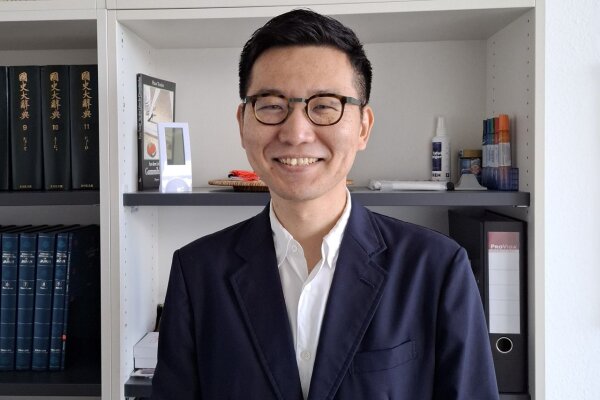
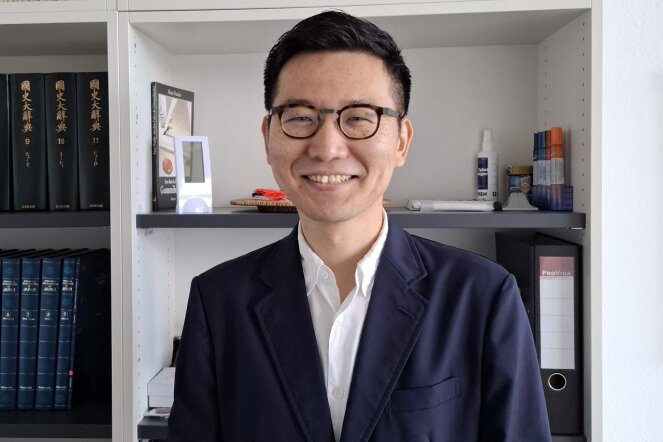
Interview with Prof. Suganuma Akimasa (June 9, 2026)
Prof. Suganuma is a historical sociologist from the Kyūshū Sangyō University. He is staying at Ruhr University as a visiting researcher from April 2026 until March 2027.
Interview: Leon Moritz, Student assistant
Dear Prof. Suganuma, thank you for taking the time to conduct this interview. Is this your first time here in Bochum, or have you visited Germany or Bochum before?
This is my first time in Bochum, but I have been to Germany a total of three times. The first time was three or four years ago when I presented my research in Berlin. The second time was around three years ago. I went to Belgium to join an international conference and returned to Japan via Frankfurt Airport afterwards. At that time, I stayed maybe five days in Frankfurt. But I have never been to Bochum before.
In that case, this is your first long-term stay in Germany. Could you explain your research interests next?
I am a historical sociologist specializing in tourism, media, cultural heritage, and nationalism in modern Japan. My research examines how cultural heritage becomes widely shared at the national level and how ordinary people come to regard it as national. In particular, I have studied the history of school trips and cultural heritage appreciation in Kyōto and Nara. There are many old temples and shrines there, which Japanese people regard as traditional and ancient. They are thus national symbols of Japan. But the English historian Eric Hobsbawm has said that many traditions associated with nation-states were created or reconstructed in the modern era. For example, states began only in the modern era to propagate things as traditional. My research focuses on the processes and mechanisms through which people come to regard something as tradition.
Would you say that your research is interdisciplinary work?
Yes. My research combines sociology, history, tourism studies, educational history, and heritage studies. I use historical methods to answer sociological questions about culture and society and would thus say that my research is indeed interdisciplinary work.
Have you already published any articles or books that are relevant to your current research?
Two months ago, I published a book on the historical sociology of cultural heritage appreciation in Japan. It examines how cultural practices and heritage sites associated with Kyōto and Nara came to be regarded as part of Japan’s national tradition by ordinary people between the Meiji era and the period of rapid economic growth after the Second World War in Japan. The book has been positively received in Japan and was recently reviewed by a famous historian in one of Japan’s major national newspapers, The Asahi Shimbun.
Has this always been your research topic, or have you worked on something different before?
I have been working on this topic since my student years. Of course, I have also researched other historical areas and published several articles on cultural heritage, tourism, and school trips in modern Japan. For example, my previous research focused on the historical development of cultural heritage tourism in Japan. I examined how schools, tourism organizations, government policies, and the media contributed to making cultural heritage a widely shared part of Japanese national culture.
And what are you currently researching during your research stay in Bochum?
During my stay at Ruhr University, I am conducting a comparative historical sociology of cultural heritage in Japan and Germany. I am interested in how cultural heritage becomes shared at the national level and continues to be reproduced over time. There are a lot of industrial heritage sites in Bochum, which I want to study for this because while I know the Japanese case well, I want to further explore the German case.
So, you want to compare Germany’s and Japan’s industrial heritage?
Yes, I wrote in my book that Hobsbawm’s theory alone cannot fully explain the Japanese case and instead offered a new theory in it, which I am going to present in English.
Are there any connections between Germany and Japan in your research that you have discovered so far?
Yes. Both countries have developed systems for preserving and promoting cultural heritage. Both countries have also used cultural heritage for tourism. By comparing Japan and Germany, I hope to better understand how heritage becomes meaningful to wider society.
What kind of sources are you working with to achieve this? Are there any sources you can only access here?
I mainly use historical documents, government records, newspapers, tourism materials, and educational sources. During my stay in Germany, I am also examining German scholarship and archival materials related to cultural heritage and historical memory. Although I have just started learning German, we are luckily able to use translation technology to make this easier.
How do you finance your research stay?
This is an important question for researchers. My research stay is funded by my home university, the Kyūshū Sangyō University, and the Japan Society for the Promotion of Science (JSPS). This sort of funding is called Kakenhi (Grants-in-Aid for Scientific Research).
Have you already heard about the Ruhr University or the Faculty of East Asian Studies before coming here?
I had known about Ruhr University and the Faculty of East Asian Studies before coming to Germany through one of my colleagues, Professor Shimizu Yuichiro. He is a political scientist and had previously spent time here. I had previously considered Berlin to be best suited for my research stay, since I have already been to Berlin three or four years ago. But when talking about which university would be best for me, Professor Shimizu said that Ruhr University has a large collection of works on Japanese and Asian history, and that Bochum seemed like an excellent place for a long-term research stay.
Therefore, Professor Shimizu influenced your decision to carry out your research in Germany and at Ruhr University?
Yes, but I also wanted to find a good balance between research and family life during my stay abroad. I considered several countries, but Germany seemed to offer both a safe living environment and strong academic opportunities. Another important reason was Professor Katja Schmidtpott, whose research on Japanese history I have long respected. Ruhr University was therefore a good place for my project.
What do you think of the Ruhr University, the Faculty of East Asian Studies and the Department of Japanese history?
I have been impressed by the international research environment. Researchers from many countries work together here. I have also received very kind support from colleagues in the Faculty of East Asian Studies, which is great for me as a visiting researcher.
Dear Prof. Suganuma, thank you again for taking the time to conduct this interview.
Book information: https://www.shin-yo-sha.co.jp/book/b674807.html (jap.)
Book review: https://book.asahi.com/article/16540229 (jap.)
Interview with Prof. Suganuma Akimasa (June 9, 2026)
Prof. Suganuma is a historical sociologist from the Kyūshū Sangyō University. He is staying at Ruhr University as a visiting researcher from April 2026 until March 2027.
Interview: Leon Moritz, Student assistant
Dear Prof. Suganuma, thank you for taking the time to conduct this interview. Is this your first time here in Bochum, or have you visited Germany or Bochum before?
This is my first time in Bochum, but I have been to Germany a total of three times. The first time was three or four years ago when I presented my research in Berlin. The second time was around three years ago. I went to Belgium to join an international conference and returned to Japan via Frankfurt Airport afterwards. At that time, I stayed maybe five days in Frankfurt. But I have never been to Bochum before.
In that case, this is your first long-term stay in Germany. Could you explain your research interests next?
I am a historical sociologist specializing in tourism, media, cultural heritage, and nationalism in modern Japan. My research examines how cultural heritage becomes widely shared at the national level and how ordinary people come to regard it as national. In particular, I have studied the history of school trips and cultural heritage appreciation in Kyōto and Nara. There are many old temples and shrines there, which Japanese people regard as traditional and ancient. They are thus national symbols of Japan. But the English historian Eric Hobsbawm has said that many traditions associated with nation-states were created or reconstructed in the modern era. For example, states began only in the modern era to propagate things as traditional. My research focuses on the processes and mechanisms through which people come to regard something as tradition.
Would you say that your research is interdisciplinary work?
Yes. My research combines sociology, history, tourism studies, educational history, and heritage studies. I use historical methods to answer sociological questions about culture and society and would thus say that my research is indeed interdisciplinary work.
Have you already published any articles or books that are relevant to your current research?
Two months ago, I published a book on the historical sociology of cultural heritage appreciation in Japan. It examines how cultural practices and heritage sites associated with Kyōto and Nara came to be regarded as part of Japan’s national tradition by ordinary people between the Meiji era and the period of rapid economic growth after the Second World War in Japan. The book has been positively received in Japan and was recently reviewed by a famous historian in one of Japan’s major national newspapers, The Asahi Shimbun.
Has this always been your research topic, or have you worked on something different before?
I have been working on this topic since my student years. Of course, I have also researched other historical areas and published several articles on cultural heritage, tourism, and school trips in modern Japan. For example, my previous research focused on the historical development of cultural heritage tourism in Japan. I examined how schools, tourism organizations, government policies, and the media contributed to making cultural heritage a widely shared part of Japanese national culture.
And what are you currently researching during your research stay in Bochum?
During my stay at Ruhr University, I am conducting a comparative historical sociology of cultural heritage in Japan and Germany. I am interested in how cultural heritage becomes shared at the national level and continues to be reproduced over time. There are a lot of industrial heritage sites in Bochum, which I want to study for this because while I know the Japanese case well, I want to further explore the German case.
So, you want to compare Germany’s and Japan’s industrial heritage?
Yes, I wrote in my book that Hobsbawm’s theory alone cannot fully explain the Japanese case and instead offered a new theory in it, which I am going to present in English.
Are there any connections between Germany and Japan in your research that you have discovered so far?
Yes. Both countries have developed systems for preserving and promoting cultural heritage. Both countries have also used cultural heritage for tourism. By comparing Japan and Germany, I hope to better understand how heritage becomes meaningful to wider society.
What kind of sources are you working with to achieve this? Are there any sources you can only access here?
I mainly use historical documents, government records, newspapers, tourism materials, and educational sources. During my stay in Germany, I am also examining German scholarship and archival materials related to cultural heritage and historical memory. Although I have just started learning German, we are luckily able to use translation technology to make this easier.
How do you finance your research stay?
This is an important question for researchers. My research stay is funded by my home university, the Kyūshū Sangyō University, and the Japan Society for the Promotion of Science (JSPS). This sort of funding is called Kakenhi (Grants-in-Aid for Scientific Research).
Have you already heard about the Ruhr University or the Faculty of East Asian Studies before coming here?
I had known about Ruhr University and the Faculty of East Asian Studies before coming to Germany through one of my colleagues, Professor Shimizu Yuichiro. He is a political scientist and had previously spent time here. I had previously considered Berlin to be best suited for my research stay, since I have already been to Berlin three or four years ago. But when talking about which university would be best for me, Professor Shimizu said that Ruhr University has a large collection of works on Japanese and Asian history, and that Bochum seemed like an excellent place for a long-term research stay.
Therefore, Professor Shimizu influenced your decision to carry out your research in Germany and at Ruhr University?
Yes, but I also wanted to find a good balance between research and family life during my stay abroad. I considered several countries, but Germany seemed to offer both a safe living environment and strong academic opportunities. Another important reason was Professor Katja Schmidtpott, whose research on Japanese history I have long respected. Ruhr University was therefore a good place for my project.
What do you think of the Ruhr University, the Faculty of East Asian Studies and the Department of Japanese history?
I have been impressed by the international research environment. Researchers from many countries work together here. I have also received very kind support from colleagues in the Faculty of East Asian Studies, which is great for me as a visiting researcher.
Dear Prof. Suganuma, thank you again for taking the time to conduct this interview.
Book information: https://www.shin-yo-sha.co.jp/book/b674807.html (jap.)
Book review: https://book.asahi.com/article/16540229 (jap.)
Copyright © GJ 2026
Last update: Jun 23, 2026